
When someone we care about is struggling with behavioral issues – whether it’s a child acting out at school, a teen pulling away and pushing limits, or an adult caught in patterns that feel hard to break – it’s easy to focus on the behavior itself. But behavior is rarely the whole story. It’s usually a signal: a way of communicating stress, unmet needs, or difficulty regulating emotions.
Behavioral issues counseling looks past the surface to understand what’s driving the behavior, and builds practical, sustainable strategies for change.
What Behavioral Issues Can Look Like
Behavioral concerns show up differently depending on age and circumstances, but common signs include:
In children and teens:
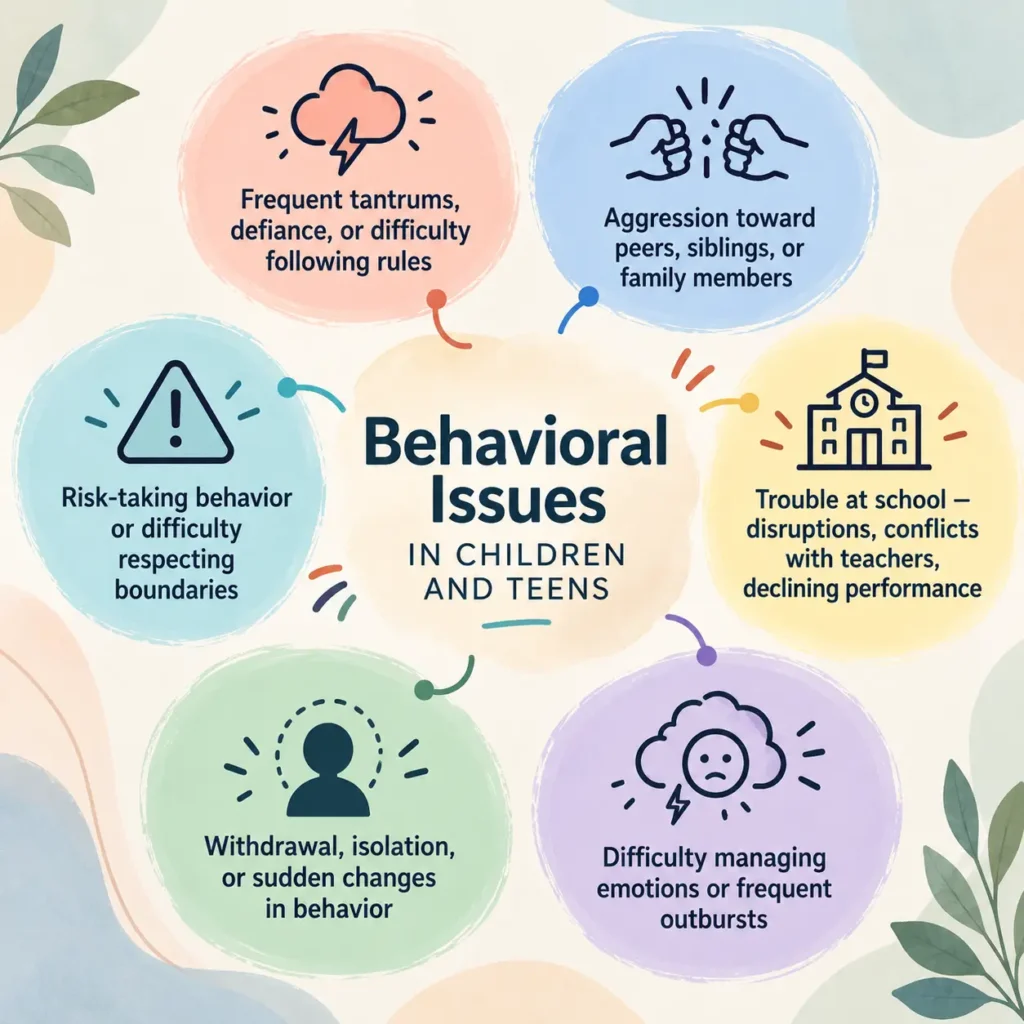
- Frequent tantrums, defiance, or difficulty following rules
- Aggression toward peers, siblings, or family members
- Trouble at school – disruptions, conflicts with teachers, declining performance
- Difficulty managing emotions or frequent outbursts
- Withdrawal, isolation, or sudden changes in behavior
- Risk-taking behavior or difficulty respecting boundaries
In children and teens
In adults
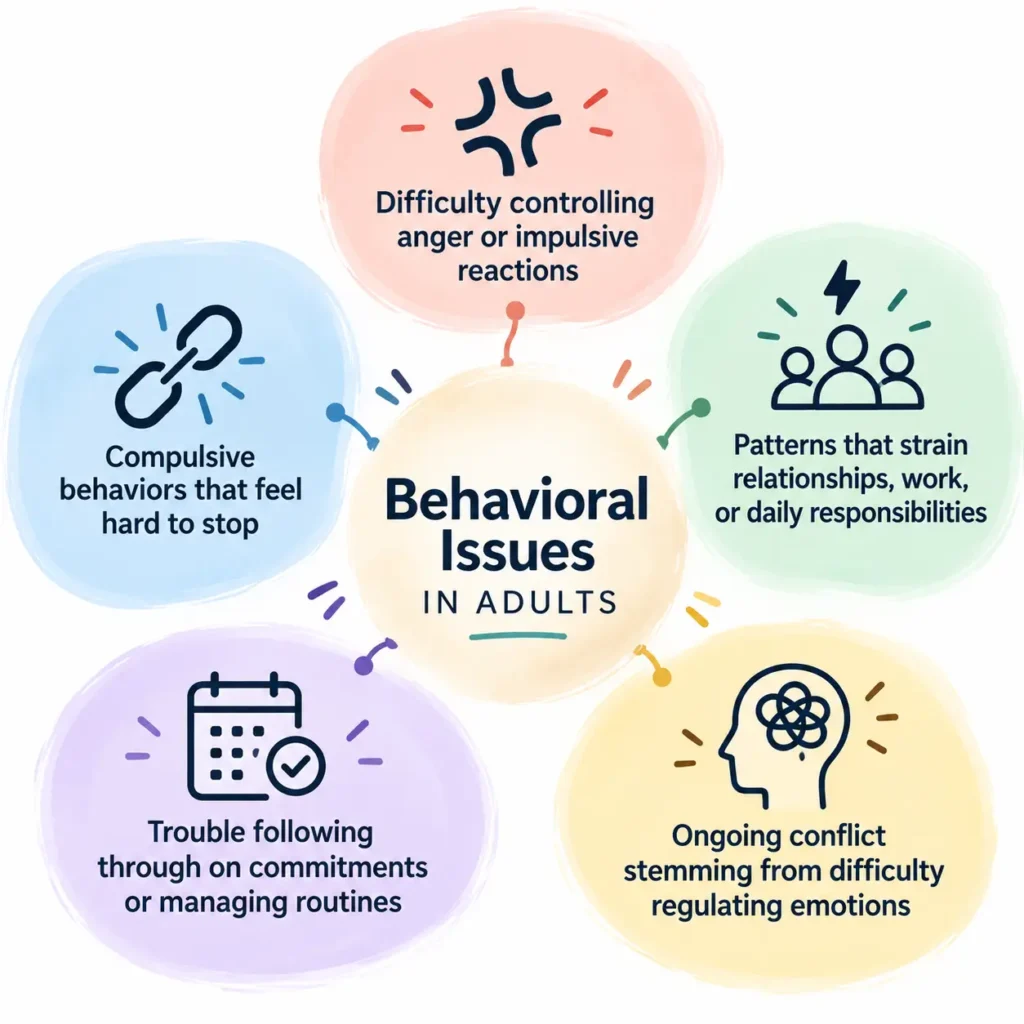
In adults:
- Difficulty controlling anger or impulsive reactions
- Patterns that strain relationships, work, or daily responsibilities
- Trouble following through on commitments or managing routines
- Compulsive behaviors that feel hard to stop
- Ongoing conflict stemming from difficulty regulating emotions
How Counseling Helps
2. Building Emotional Regulation Skills many behavioral issues stem from difficulty managing big emotions. Counseling introduces practical tools to recognize and regulate emotional responses before they escalate.
3. Developing Healthier Coping Strategies Counselors work collaboratively to replace unhelpful patterns with strategies that actually work – communication skills, problem-solving techniques, and ways to manage frustration or stress.
What to Expect in a Session
Every counseling journey looks a little different, but you can generally expect:
- An initial conversation to understand the behaviors, their context, and their impact
- Collaborative goal-setting – what change looks like and what matters most
- For children and teens, age-appropriate approaches that may include play-based or family-involved techniques
- A judgment-free space focused on understanding, not blame
Progress often takes time, and that’s normal. Behavioral change is a process, not a single conversation.
When to Reach Out
Consider behavioral issues counseling if you notice:
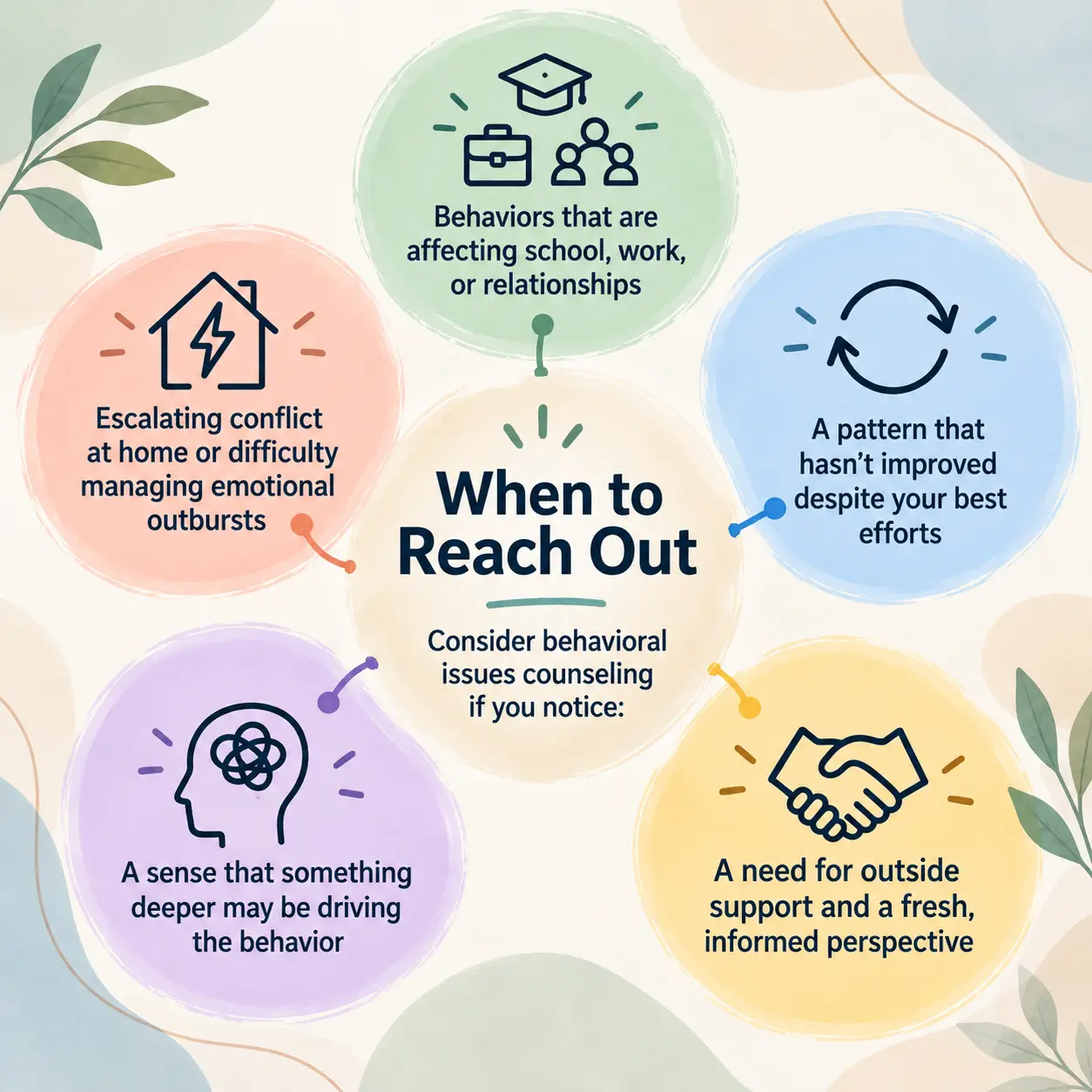
- Behaviors that are affecting school, work, or relationships
- Escalating conflict at home or difficulty managing emotional outbursts
- A pattern that hasn’t improved despite your best efforts
- A sense that something deeper may be driving the behavior
- A need for outside support and a fresh, informed perspective
- Support for Lasting Change
At Greenwood Mental Health Counseling P.C, our counselors take a compassionate, individualized approach to understanding behavior and building strategies that create real, lasting change.
Ready to Begin?
If you’re ready to take the first step, you can schedule your appointment through on our website through the Zocdoc link or directly via our secure Simple Practice client portal. Your journey to growth and healing starts here—and we look forward to supporting you along the way.
